Thursday, 16 May 2013

Mohammad Yousuf

Mohammad Yousuf Biography


Mohammad Yousuf (formerly Yousuf Youhana, born 27 August 1974, Lahore, Punjab, Pakistan) is a Pakistani cricketer who has been a member of the Pakistani national cricket team since 1998. He is best known for his achievement in 2006 when he broke the great West Indian batsman, Sir Vivian Richards', world record for the most Test runs in a single calendar year. Prior to his conversion to Islam in 2005, Yousuf was one of the few Christians to play in the Pakistan national cricket team. He made his Test debut against South Africa at Durban and ODI debut against Zimbabwe at Harare. He has scored over 9,000 ODI runs at an average of 43.63 (2rd highest batting average among Pakistani batsmen after Zaheer Abbas and 6,770 Test runs at an average of 55.49 (highest batting average amongst all Pakistani batsmen) with 23 Test centuries. He has the record of scoring the most runs without being dismissed in ODIs, 405 against Zimbabwe in Zimbabwe in 2002-03. He has also scored a 23-ball fifty in ODIs, and a 68-ball hundred. In Tests he has scored a 27-ball fifty, which is 3rd fastest by any player. He was top scorer during the successive years of 2002 and 2003 in the world in ODIs. In 2004, he scored a memorable 111 against the Australians in the Boxing Day Test. In December 2005, he scored 223 against England at Lahore, also earning him the man of the match award. Seven months later in July 2006, when Pakistan toured England, he scored 202 and 48 in the first Test, again earning himself the man of the match award. He followed up with 192 in the third Test at Headingley and 128 in the final Test at the Oval. Yousuf was named CNN-IBNs Cricketer of the Year for 2006, ahead of the likes of Australian captain Ricky Ponting, West Indies Brian Lara, Australian spinner Shane Warne, South Africas bowling spearhead Makhaya Ntini and Sri Lankas Muttiah Muralitharan. He was selected as a Wisden Cricketer of the Year in the 2007 edition. Yousuf became the fourth recipient of the ICC 'Test Cricketer of the Year' award for 2007, he scored 944 runs at an average of 94.40 including five centuries and two fifties in just 10 innings and that was enough to be awarded the honour ahead of Kevin Pietersen and Ricky Ponting. Yousuf was also named in the 2007 Test team of the Year alongside compatriot Mohammad Asif. A year that started on a promising note, Yousuf carried it forward to break two.


Mohammad Yousuf

Mohammad Yousuf

Mohammad Yousuf
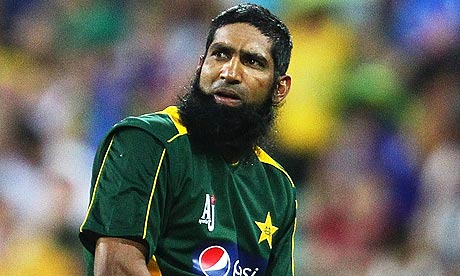
Mohammad Yousuf

Mohammad Yousuf

Mohammad Yousuf

Mohammad Yousuf

Mohammad Yousuf

Mohammad Yousuf

Mohammad Yousuf

Mohammad Yousuf

Imran Farhat

Imran Farhat Biograghy


A gifted young left-handed opener who threatened at one stage to solve Pakistan's perennial opening conundrum, Imran Farhat had a brief spell in the Pakistan side after success with the national under-19 and A sides. Farhat also evokes Saeed Anwar but only fleetingly; he bludgeons rather than times his runs. He was rather too cavalier in his early appearances in the Test arena, and was promptly discarded after the tour to New Zealand in 2000-01. However, he tightened his game and achieved much more success in the 2003-04 season. Tempering his impressive array of shots with better defensive technique, Farhat scored a deluge of runs in the home series against South Africa and New Zealand, being involved in a record four successive hundred partnerships with Yasir Hameed in the one-day internationals against New Zealand. He also notched up his first century in both Tests and ODIs during this season, and then went on to score a vital 101 in Pakistan's victory against India in the Lahore Test. But since the India series, he has fallen away. A mediocre series at home to Sri Lanka and away to Australia saw him falter, especially with the emergence of the other left-handed opener, Salman Butt. When Pakistan included only one specialist opener in the squad for the series against England in 2005 - Butt - seemingly it confirmed that Farhat, temporarily, was out of national reckoning. But as an opener in Pakistan, you are never out of national reckoning and sure enough Farhat was back for the final Test against India, where he scored a fifty. That performance saw him on the plane to Sri Lanka and an average series. But with openers becoming as rare as dinosuars in Pakistan, he was retained for the summer tour to England, where he again produced some mixed results. Despite failures in the first two Tests, a broken finger and a spate of dropped catches, he came back to score a cavalier 91 in the final, fateful Oval Test. Runs against West Indies at home were followed by a barren patch in South Africa. A first away hundred followed by a patient half-century in the Napier Test of 2009 has set him up for a long sojourn in the Test side. His ODI career has however hit roadblocks since he was dropped after an indifferent run of scores in 2006.


Imran Farhat


Imran Farhat

Imran Farhat

Imran Farhat

Imran Farhat

Imran Farhat

Imran Farhat

Imran Farhat

Imran Farhat

Imran Farhat
Imran Farhat


Waqar Younis

Waqar Younis Biography

Waqar Younis Maitla is a former Pakistani right arm fast bowler in cricket and widely regarded as one of the best fast bowlers of all time.

He was best known in cricket for his ability to reverse swing a cricket ball at high speed when bowling at the cricket pitch. He took 373 Test wickets and 416 One Day International wickets during his career. He is considered to be the best exponent of the swing bowling delivery. Younis has the best strike rate for any bowler with over 200 Test wickets. He worked as a bowling coach with the national side from 2006 to 2007.

Younis was appointed as the coach of the Pakistan cricket team on 3 March 2010. His managerial contract with the Pakistan Cricket Board will take part in all forms of cricket, right up to December 2011, which will include all professional competitions, such as the 2011 Cricket World Cup.

Younis began his cricket career in Pakistan, playing for several First-class cricket clubs. However he suffered an injury when he had cut and removed his little finger on his left hand, after he had jumped into a canal. He recovered from this accident and went on to continue his sporting career. He was eventually discovered by former Pakistan captain, Imran Khan and was selected to be part of the national side. The turning point of his career happened in England, during the late 1980s and early 1990s, when he played for Surrey County Cricket Club. There he displayed excellent cricketing performances and attracted attention from the sporting public.

Sri Lanka fast bowler, Lasith Malinga, who became the first bowler in World Cup history to take two hat-tricks, has said that he learnt to bowl his deadly yorkers by watching Pakistan's legendary pair of Wasim Akram and Waqar Younis. No doubt over the years several bowlers have learned and mastered the skill of reverse swing but there are still some techniques which haven't have been explored e.g. banana swing. Title of Banana swing bowler was given to Waqar Younis because of his unique technique of swinging the ball in the air at very high speed before hitting the ground. In most of his hat tricks he has delivered banana swing balls which were unplayable.

Despite his qualities as a fast bowler, he was expensive at times and sometimes lacked the consistency of bowlers such as West Indian fast bowler Curtly Ambrose and Australian fast bowler Glenn McGrath. This may be partly due to the mentality of his former captain, Imran Khan, who prioritised aggression and speed.

Waqar Younis

Waqar Younis

Waqar Younis

Waqar Younis

Waqar Younis

Waqar Younis

Waqar Younis

Waqar Younis

Waqar Younis

Waqar Younis

Waqar Younis

Waseem Akram

Wasim Akram Biography

Wasim Akram born in Lahore, Punjab is a former Pakistani cricketer. He was a left-arm fast bowler and left-handed batsman, who represented the Pakistani cricket team in Tests and One Day Internationals. Widely regarded as one of the finest fast bowlers ever, Akram holds world records for the most wickets taken in both ODIs (502) and List A cricket (881), and was one of the pioneers of reverse swing bowling. The revolutionary nature of reverse swing initially resulted in accusations of ball tampering, although reverse swing has now been accepted as a legitimate feature of the game. Akram's later career was also tarnished with accusations of match fixing, although these remain unproven.

Following his retirement, Akram found himself as a sports commentator for ESPN and other networks, reporting on a number of sports, not just cricket. However, in 2010, Akram entered back into the world of cricket as bowling coach consultant for the Kolkata Knight Riders and as a couch for a number of training camps. The former cricket champ also found great support and gratification in his work as diabetes advocate and spokesperson for Accu Chek. Akram, who was diagnosed with type I diabetes in 1997, speaks openly about his illness and is determined to use his fame to promote awareness and break the stereotype that diabetes can’t be controlled. Akram, in an interview with Complete Wellbeing, stated,” I wanted to help people become aware of the disease and what is available to deal with it. I took 250 wickets after I was diagnosed with diabetes. I monitor my sugar levels every second day before breakfast and after lunch. If I am stressed about something I check my sugar to see how it is affected by stress. As I am in the know about what affects my sugar levels, I am more able to control it.”

Wasim retired in 2003, after a brief spell with Hampshire in England. Since then, Wasim has taken up commentary and can currently be seen as a sportscaster for the ESPN Star network, and is also running shows on ARY Digital. He is married to Huma Mufti, daughter of Mr. Humayaun Mufti. Wasim and Huma have two sons from their marriage of fourteen years. Wasim has also appeared in Fuzon video as a model.

Wasim Akram

Wasim Akram

Wasim Akram

Wasim Akram

Wasim Akram

Wasim Akram

Wasim Akram

Wasim Akram

Wasim Akram

Wasim Akram

Wasim Akram

Shahid Afridi

Shahid Afridi Biography

Source(google.com.pk)
Sahibzada Mohammad Shahid Khan Afridi, popularly known as Shahid Afridi, is a Pakistani cricketer. Between 1996 and 2012, Afridi played 27 Tests, 334 One Day Internationals, and 46 Twenty20 International for the Pakistani national team.
He made his ODI debut on 2 October 1996 against Kenya and his Test debut on 22 October 1998 against Australia.
He is known for his aggressive batting style, and holds the record for the fastest ODI century which he made in his first international innings, as well as scoring 32 runs in a single over, the second highest scoring over ever in an ODI.
He also holds the distinction of having hit the most number of sixes in the history of ODI cricket.Afridi considers himself a better bowler than batsman, and has taken 48 Test wickets and over 300 in ODIs.
Currently Afridi is the leading wicket taker in the Twenty20 format taking 53 wickets from 43 matches.Shahid Afridi has signed to play for the Sydney Thunderin Australia’s Twenty20 Big Bash league.
In June 2009, Afridi took over the Twenty20 captaincy from Younus Khan, and was later appointed ODI captain for the 2010 Asia Cup. In his first match as ODI captain against Sri Lanka he scored a century however Pakistan still lost by 16 runs.
He then also took over the Test captaincy but resigned after one match in charge citing lack of form and ability to play Test cricket; at the same time he announced his retirement from Tests. He retained the captaincy in limited-overs form of the game and led the team in the 2011 World Cup. In May 2011, having led Pakistan in 34 ODIs Afridi was replaced as captain.
Later that month he announced his conditional retirement from international cricket in protest against his treatment by the Pakistan Cricket Board (PCB); in October he reversed his decision. UNICEF and Pakistani authorities have taken Shahid Afridi on board for its anti-polio campaign in the tribal belt of lawless Waziristan region.

Shahid Afridi

Shahid Afridi

Shahid Afridi

Shahid Afridi

Shahid Afridi

Shahid Afridi

Shahid Afridi

Shahid Afridi

Shahid Afridi

Shahid Afridi

Shahid Afridi